
In an era of planned obsolescence, the idea of a household appliance lasting five decades seems like a relic of the past. However, the ironing board—a mechanical staple of the home—is uniquely positioned for extreme longevity if treated with the right care. Sustainable laundry isn’t just about the detergents you use; it is about the hardware that supports the process. By shifting our perspective from “disposable consumer” to “steward of tools,” we can significantly reduce landfill waste and enjoy the superior performance of a well-maintained, high-quality board.
The Anatomy of a Lifetime Ironing Board: Structural Integrity and Materials
To ensure an ironing board lasts half a century, one must first understand the materials that contribute to its lifespan. Most modern boards fail not because of the mesh surface, but due to the degradation of the pivot points and the oxidation of the frame. High-carbon steel frames with reinforced cross-bracing offer the best resistance to the mechanical stress of repeated opening and closing.
The Importance of Pivot Point Maintenance
The “knee” of the ironing board is its most vulnerable area. Over years of use, the friction between metal components can wear down the locking mechanism. Applying a dry silicone lubricant once a year prevents the metal-on-metal grinding that eventually leads to a “wobbly” board. Unlike oil-based lubricants, silicone does not attract dust or lint, keeping the mechanism clean and smooth.
Mesh vs. Solid Top Engineering
While solid tops were common in the mid-20th century, modern expanded steel mesh is superior for steam dissipation. However, mesh is more prone to rust if moisture is trapped between the pad and the frame. Understanding this trade-off is key: a mesh board requires better ventilation and a high-quality felt pad to prevent the “waffle pattern” from transferring to your clothes while protecting the metal from direct steam contact.
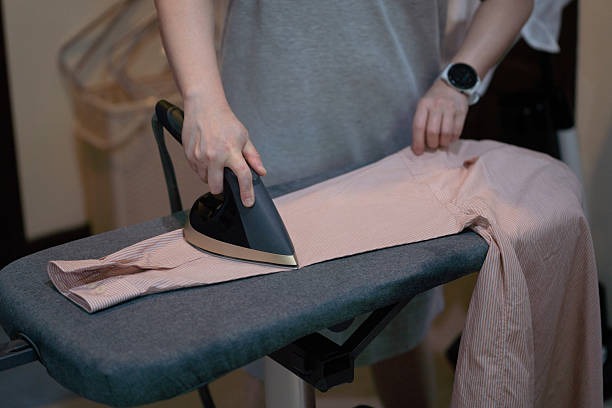
Proactive Rust Prevention and Environmental Control
Rust is the primary enemy of any metal laundry tool. Because ironing inherently involves heat and moisture, the environment surrounding your board is often humid. To achieve a 50-year lifespan, you must treat the frame as you would a fine piece of machinery.
| Material Type | Expected Lifespan | Primary Maintenance Need |
|---|---|---|
| Powder-Coated Steel | 20-30 Years | Touch-up paint on scratches to prevent oxidation. |
| Stainless Steel | 50+ Years | Periodic cleaning of pivot joints. |
| Aluminum Alloy | 15-25 Years | Monitoring for structural bending/warping. |
Expert Tip: After a heavy steam ironing session, never fold and store the board immediately. Leave it standing in an open position for at least 30 minutes. This allows the residual moisture in the pad and the frame to evaporate, preventing the “micro-climate” of dampness that triggers rust inside the leg tubes.
Optimizing the Soft Goods: Covers and Padding
While the frame can last 50 years, the cover and padding will not. A sustainable approach involves replacing these components every 3 to 5 years to protect the underlying structure.
- Heavy-Duty Felt Padding: Avoid cheap foam inserts. High-density needle-punch felt provides better heat retention and protects the metal mesh from the weight of the iron.
- 100% Cotton Covers: Synthetic covers can melt or degrade under high heat. A heavy-gauge cotton duck or drill fabric is durable and can be washed repeatedly.
- Drawstring Tension: Ensure your cover is always tight. A loose cover causes the iron to “drag,” which puts unnecessary lateral pressure on the board’s legs.
Expert Advice: The “Annual Tune-Up” Checklist
To keep your equipment in top-tier condition, perform these four steps every January:
- Tighten Fasteners: Use a wrench or screwdriver to ensure all bolts at the leg junctions are snug but not over-tightened.
- Inspect Feet: Check the rubber or plastic floor caps. If they wear through, the metal leg will scrape the floor and begin to mushroom or rust from the bottom up.
- Surface Leveling: Place the board on a known level surface. If it wobbles, adjust the leg tension or replace the caps to ensure even weight distribution.
- Frame Cleaning: Wipe down the metal frame with a microfiber cloth and a mild degreaser to remove any built-up starch or fabric spray residue.
Frequently Asked Questions (FAQ)
- Can I repair an ironing board that has already started to rust?
- Yes. Use a fine-grade steel wool to remove surface rust, then apply a rust-inhibiting primer and a high-heat enamel paint. This seals the metal and stops the oxidation process from spreading to the core of the frame.
- Why does my ironing board make a loud popping noise when it gets hot?
- This is usually caused by “oil-canning,” where the metal mesh expands faster than the outer frame. While common, you can minimize this by using a thicker felt pad, which insulates the metal and slows down the rate of thermal expansion.
- Is it worth buying a vintage wooden ironing board?
- Vintage wooden boards are incredibly durable but require different care. They must be kept in a climate-controlled environment to prevent warping and should never be used with excessive steam unless a waterproof barrier is placed under the pad.
- How do I fix a locking mechanism that won’t stay engaged?
- Check for lint buildup inside the notches of the height adjustment rail. Often, a simple cleaning with an old toothbrush and a drop of dry lubricant will allow the teeth to seat properly again.
- What is the most sustainable way to dispose of an old ironing board?
- If the frame is intact, donate it to a local sewing collective. If the metal is compromised, remove all fabric and foam and take the frame to a scrap metal recycler. Steel is 100% recyclable and can be repurposed into new tools.