
For decades, the ironing board has been a staple of the domestic landscape, yet recent trends in fast fashion and the rise of the garment steamer have led many to question its continued relevance. The truth, however, is that the ironing board is not merely a flat surface; it is a precision-engineered tool designed to facilitate the interaction between heat, moisture, and pressure. To achieve the sharp lines of a pleated skirt or the rigid collar of a professional dress shirt, a stable, breathable surface is non-negotiable. This guide serves to reconstruct our understanding of this tool, moving past common misconceptions and highlighting the sophisticated role it plays in modern textile care.
Debunking Dangerous Ironing Board Myths and Safety Hazards
One of the most persistent and potentially hazardous myths circulating in DIY circles is the idea that an ironing board can double as a kitchen potholder or a landing pad for hot cookware. While it may seem logical—given that ironing boards are designed to withstand the heat of a clothes iron—this assumption ignores the fundamental physics of heat transfer and structural design.
The Potholder Fallacy: Material vs. Function
Ironing board covers are typically treated with silicone or constructed from heavy-duty cotton designed to reflect heat back into the garment. However, there is a massive difference between the localized, controlled heat of an iron and the sustained, high-temperature thermal mass of a heavy cast-iron skillet or a boiling pot. Placing such items on an ironing board can lead to several catastrophic failures:
- Thermal Conductivity: Most ironing boards feature a metal mesh frame. While the cover is heat-resistant, the metal underneath can quickly conduct heat, potentially melting the padding or causing burns to anyone who touches the frame.
- Structural Instability: Ironing boards are designed for lateral movement (the sliding of an iron) rather than significant vertical weight. A heavy pot can exceed the weight limit of the locking mechanism, leading to a collapse that could result in severe burns or kitchen fires.
- Chemical Off-gassing: Some older or cheaper board covers use synthetic materials that, when exposed to temperatures exceeding 400 degrees Fahrenheit (common for pans), can release toxic fumes or scorch permanently.
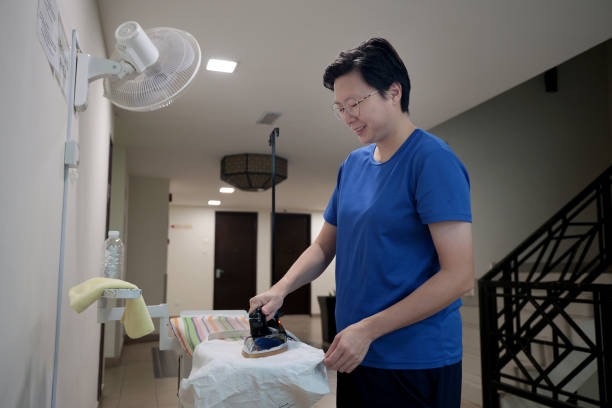
Why the Ironing Board Remains the Ultimate Tool for Garment Care
Many consumers have attempted to transition entirely to steamers, citing convenience and speed. While steamers are excellent for delicate fabrics like silk or for removing light wrinkles from hanging drapes, they lack the mechanical force required for true garment shaping. Admitting that we were wrong about the “death of the ironing board” requires looking at the technical advantages of pressing.
The Power of Mechanical Pressure
Ironing is a three-part process involving heat to soften fabric fibers, moisture (steam) to relax them, and pressure to set them in a specific shape. A steamer provides the first two but completely lacks the third. On an ironing board, the user applies downward force, which flattens the fibers against a hard surface. This is what creates that “like-new” crispness found in professionally laundered clothing.
| Feature | Garment Steamer | Ironing Board & Iron |
|---|---|---|
| Fiber Compression | Minimal to None | High (Professional Finish) |
| Crease Creation | Impossible | Excellent (Trousers/Sleeves) |
| Precision | Low (General Wrinkles) | High (Collars/Cuffs/Pleats) |
| Speed | Fast for single items | Slower but more thorough |
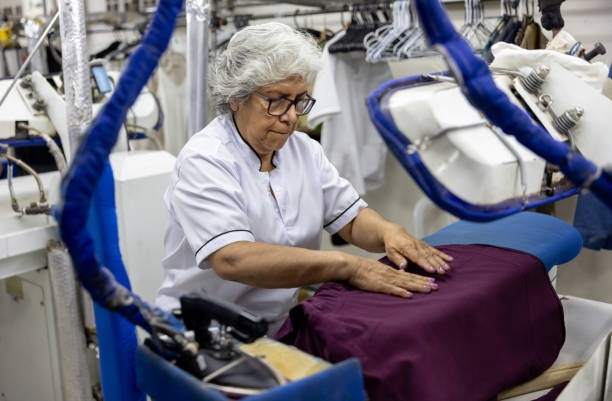
Understanding the Material Science of Ironing Board Covers
The efficacy of an ironing board is largely determined by its cover and padding. A high-quality board is not just a piece of wood or metal; it is a multi-layered system designed to manage moisture and heat. Modern boards utilize advanced materials to ensure that steam passes through the fabric rather than condensing and causing water spots.
The Role of Perforated Steel and Felt Padding
Top-tier ironing boards feature a perforated steel top. This allows excess steam to escape downward, preventing the garment from becoming damp during the process. Beneath the decorative cotton cover, there is usually a layer of felt or foam. Thicker padding is essential because it prevents the pattern of the metal mesh from being “embossed” onto your clothing—a common problem with cheap, thinly padded boards.
When selecting a replacement cover, look for “scorch-resistant” labels. These covers are often treated with a specialized coating that increases the threshold at which the fabric will begin to carbonize, providing an extra layer of safety during high-heat cotton or linen settings.
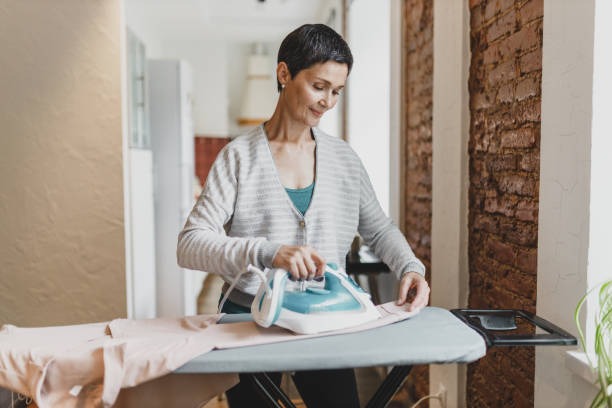
Mastering Ironing Techniques for Professional Results
To truly leverage the power of an ironing board, one must move beyond the “lazy ironing” method of simply smoothing out the middle of a shirt. Professional results require a systematic approach that utilizes the unique shape of the board, particularly the tapered “nose.”
The Systematic Pressing Order
To avoid re-wrinkling sections you have already finished, follow this industry-standard sequence:
- Collars and Cuffs: Start with these small, structured areas. Iron the underside first, then the top, moving from the points toward the center to avoid bunching.
- The Yoke (Shoulders): Drape the shoulder of the shirt over the narrow end of the board. This allows the fabric to lie flat without the rest of the shirt getting in the way.
- Sleeves: Lay the sleeve flat, following the seam as a guide. Use the board’s surface to ensure the crease is sharp and straight.
- Body Panels: Save the large flat areas for last. Use the wide part of the board to maximize efficiency.

Comparing Traditional Ironing Boards with Modern Steamers
While we have established the superiority of the board for crispness, it is important to understand the logical use cases for both tools. An automated pillar page approach to garment care suggests that the two are complementary rather than mutually exclusive. However, for anyone serious about their professional appearance, the board remains the primary tool.
The “utility gap” between a steamer and a board becomes most apparent when dealing with natural fibers like heavy cotton, denim, or linen. These materials have a “memory” in their molecular structure. Steam alone can relax the fibers temporarily, but without the flat-bed cooling that occurs on an ironing board, the fibers often return to their wrinkled state as soon as they encounter humidity or body heat.

Essential Maintenance for Longevity and Performance
An ironing board is a mechanical device that requires periodic maintenance to remain safe and effective. Neglecting the structural components can lead to wobbling, which is a major cause of iron-related accidents in the home.
Tightening and Lubrication
Over time, the rivets and bolts at the leg joints can loosen. Periodically check these points and tighten them to ensure the board remains stable under pressure. If the height-adjustment lever becomes difficult to operate, a small amount of silicone-based lubricant on the sliding track can restore smooth function. Furthermore, always inspect the rubber feet; if they are worn down to the metal, the board may slip during use, creating a significant safety risk.
Frequently Asked Questions (FAQ)
- Q1: Can I use a towel on a table instead of an ironing board?
- While possible in an emergency, it is not recommended. Tables lack the steam-permeable mesh of a board, meaning moisture gets trapped between the table and the garment, often resulting in a damp, wrinkled finish and potential damage to the table’s varnish.
- Q2: Why does my ironing board squeak, and is it dangerous?
- Squeaking is usually caused by metal-on-metal friction at the joints. While not inherently dangerous, it indicates wear. Lubricating the joints can fix this, but if the squeak is accompanied by wobbling, the structural integrity may be compromised.
- Q3: How often should I replace my ironing board cover?
- For average household use, replace the cover and the padding every 2-3 years. If you notice scorching, thinning of the foam, or if the cover has lost its “grip,” it should be replaced immediately to protect your clothes.
- Q4: Is it safe to leave an iron face-down on the board’s “rest” area?
- Most modern boards have a dedicated metal heat rest designed for this. However, you should never leave an iron unattended. Even on a heat rest, the sustained temperature can eventually transfer to the frame or the floor.
- Q5: Are wider ironing boards better than standard ones?
- Wider boards (often called “European size”) are excellent for linens, tablecloths, and large shirts as they require fewer repositioning movements, saving time and reducing the risk of accidental re-wrinkling.