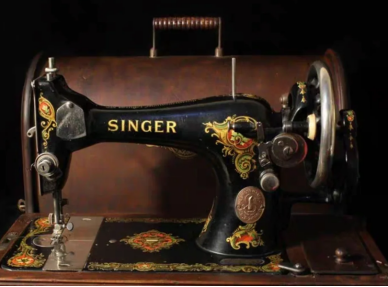
When modern electric sewing machines flooded the market, which were efficient but slightly monotonous, antique hand-cranked sewing machines were like messengers of time, bringing the charm and exquisite craftsmanship of the past into our field of vision. They are not only tools for sewing clothes, but also witnesses of the development of industry, carrying profound historical and cultural values.
The History of Antique Hand-Cranked Sewing Machines
In 1790, Englishman Thomas Saint invented the world’s first single-thread chain stitch hand-cranked sewing machine that punched holes first and then threaded the thread. It was mainly used for sewing leather and canvas materials, but it was not widely used at the time.
In April 1845, American Elias Howe created a practical hand-cranked sewing machine, which greatly improved sewing efficiency and started the process of sewing machine practical application. In 1851, American machinist IM Singer invented the lockstitch sewing machine and founded Singer Company. During this period, sewing machines were mainly hand-cranked. Until 1859, Singer Company invented the pedal sewing machine. In 1889, it further combined electric motors with sewing machines, creating a new era of sewing machine industry .
How an Antique Hand-Cranked Sewing Machine Works
The power is mainly provided by a large hand-cranked wheel. When the large wheel is turned, the complex internal mechanical transmission device starts to work, the needle bar moves up and down to penetrate the fabric, the bottom shuttle cooperates with the upper thread to form a lock stitch, and the feed dog mechanism pushes the fabric to move in the set direction, thereby achieving continuous sewing. Compared with modern sewing machines, a major feature of antique hand-cranked sewing machines is their purely mechanical structure, which does not require electric drive. When operating, you can truly feel the fun of manual and mechanical synergy, and the metal texture and exquisite craftsmanship of the mechanical parts fully demonstrate the industrial aesthetics.
Common antique hand-cranked sewing machine brands
Singer
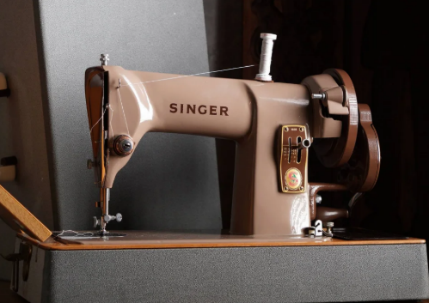
A long-standing name in the field of sewing machines. For example, the Singer 185K model was manufactured at the Kilbowie factory in Scotland from 1958 to mid-1963 and often comes with the original box and small tool box.
PFAFF
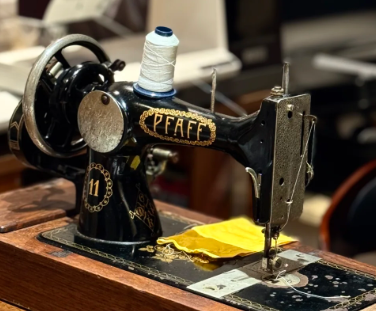
Germany’s PFAFF brand is also a classic. For example, the PFAFF11 hand-cranked sewing machine was produced in the 1950s. It has smooth hand-cranking and normal functions and often comes with a case cover. Although it has gone through the years, it still retains good mechanical properties and occupies a certain position in the collection of antique sewing machines.
Wilcox & Gibbs
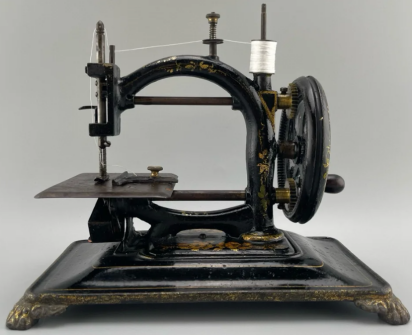
Wilcox & Gibbs, founded in 1857, is an early brand in the world that mass-produced civilian sewing machines. Its 1900s New York Wilcox & Gibbs hand-cranked sewing machines, which have been in use for more than a hundred years, still operate quietly and smoothly, giving people a glimpse of the high level of American industrial manufacturing at the time. They are extremely popular in the collectors’ circle, but are becoming increasingly rare in the market.
Whether you are a collector or a friend who is interested in vintage objects, you can gain different kinds of fun and knowledge by gaining a deeper understanding and exposure to antique hand-cranked sewing machines.