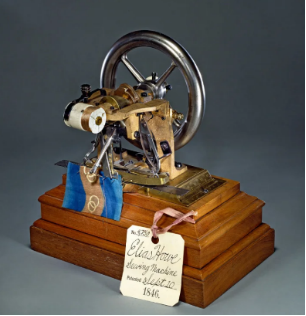
Early attempts and beginnings (18th century – early 19th century)
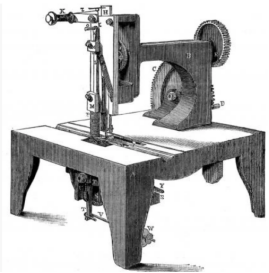
Before the 18th century, all sewing work was done by hand, which was an extremely labor-intensive and time-consuming process. In 1755, German engineer Charles Fredrick Wiesenthal obtained a British patent for a double-pointed needle that could be seen as an early attempt to develop a sewing machine, but the invention was not widely used.
In 1790, Englishman Thomas Saint designed the first sewing machine. This machine was designed for sewing leather and canvas. It used an awl to make holes in the material and then used a needle to thread the thread. Unfortunately, during his lifetime, this sewing machine remained at the design blueprint stage and was not actually manufactured. Nevertheless, its design concept laid the foundation for the development of subsequent sewing machines.
In the early 19th century, several inventors worked to create a practical sewing machine. In 1830, French tailor Barthélemy Thimonnier patented a sewing machine that used a hooked needle to sew straight seams. Thimonnier’s machine was so revolutionary that it was also used to sew uniforms for the French army. However, fearing job losses, a group of tailors destroyed his workshop, hindering further adoption of the invention.
in sewing machines (mid-19th century)
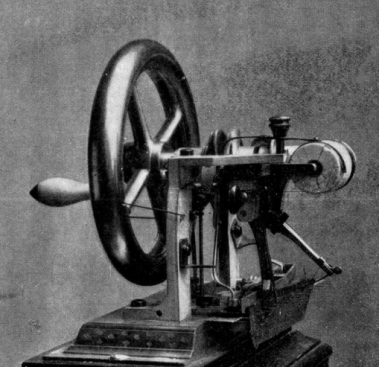
In 1846, American inventor Elias Howe made a breakthrough. He patented a lockstitch sewing machine that had a needle hole at the tip and used a shuttle to create the stitch under the fabric. Howe’s design was ingenious, but he had trouble finding investors in the United States, so he took his machine to England, where he had some success.
While Howe was in England, American entrepreneur Isaac Merritt Singer improved on Howe’s design. In 1851, Singer patented his own sewing machine, which featured straight needles, a presser foot to hold fabric in place, and a foot pedal that allowed for continuous operation. Singer’s machine was more practical and easier to use, and it was quickly adopted.
Technological innovation (late 19th century – 20th century)
In the mid-20th century, computerized sewing machines were introduced, offering programmable sewing patterns and precise control. These machines revolutionized both home sewing and industrial manufacturing, enabling complex designs and mass production with unprecedented efficiency.
Modern sewing machine
Today, sewing machines have become sophisticated, versatile tools used in a variety of industries including fashion, interior decoration, automotive, aerospace, and more.
From the initial simple design concept to today’s powerful and widely used modern tools, the development of sewing machines has witnessed mankind’s continuous pursuit of efficiency and innovation.