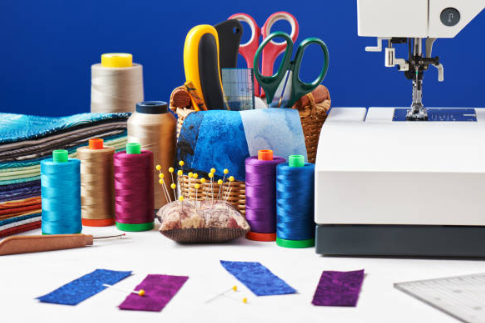
Essential Sewing Materials and High-End Threads
Selecting the right materials is the cornerstone of any successful sewing project. Among the various options, silk thread stands out as a premium choice, offering unparalleled luster and softness. Its natural protein structure allows it to glide through delicate fabrics without causing friction damage, making it ideal for high-end garment construction.
Understanding Thread Selection
- Silk Thread: Known for its high tensile strength and natural elasticity. It is perfect for tailoring silk, wool, and other fine natural fibers.
- Polyester vs. Cotton: While cotton is reliable for quilting, polyester provides the synthetic strength required for modern stretch fabrics and high-durability projects.
Best Practices for Material Storage
Proper storage prevents fraying, fading, and moisture damage. Always store your fabrics in a cool, dry, and dark environment. Use acid-free tissue paper when folding delicate silks to prevent permanent creasing. Categorize your thread spools by color and weight to maintain an efficient workflow.

Mastering Needlepoint: Tension and Stitch Length
The secret to professional-looking seams lies in the precise calibration of your sewing machine. Incorrect tension settings can lead to puckering, looping, or weak seams that unravel under stress. Understanding the mechanical interplay between the needle, the bobbin, and the fabric density is essential.
Adjusting Thread Tension
Tension is the balance between the top thread and the bobbin thread. If the top thread is too tight, it will pull the bobbin thread to the surface, creating visible loops. Conversely, if the tension is too loose, the seam will lack structural integrity.
Optimizing Stitch Length
Stitch length should be adjusted based on the fabric’s weight. For heavy-duty fabrics like denim or canvas, a longer stitch (3.0mm–4.0mm) is required. For lightweight materials, a shorter stitch (1.5mm–2.0mm) ensures that the seams remain secure and tidy.

Essential Sewing Terminology for Beginners
Navigating the world of sewing requires a strong grasp of industry-standard vocabulary. Understanding these terms will allow you to read patterns, follow tutorials, and communicate effectively with other sewists.
Must-Know Concepts
- Grainline: The direction of the threads in a fabric. Understanding the grain is critical for proper garment drape.
- Seam Allowance: The space between the edge of the fabric and the stitch line. Standard allowances are usually 5/8 inch.
- Backstitching: The process of sewing backward and forward at the start and end of a seam to lock the threads in place.

The Ultimate Sewing Toolbox Checklist
A well-equipped sewing kit can significantly reduce frustration and improve project outcomes. Beyond the basic sewing machine, there are ten items that every beginner should invest in to ensure professional results.
The 10 Must-Have Items
| Item | Purpose |
|---|---|
| Fabric Shears | Clean, precise cutting of textile edges. |
| Seam Ripper | Essential for correcting mistakes. |
| Measuring Tape | Flexible tool for body and garment dimensions. |
| Tailor’s Chalk | Temporary marking on fabric surfaces. |
| Pins and Pincushion | Holding fabric pieces together before sewing. |
By keeping these tools organized, you create a streamlined environment that encourages creativity and minimizes the time spent searching for equipment.
Frequently Asked Questions (FAQ)
- Q1: How do I know if my thread tension is correct?
- The ideal tension creates a “locked” stitch in the center of the fabric layers. If you see loops on the bottom, increase the top tension; if you see them on top, decrease it.
- Q2: Why does my silk thread keep breaking?
- Silk is delicate; ensure you are using a sharp, high-quality needle (Universal or Microtex) and that your machine’s throat plate is free of burrs that might snag the thread.
- Q3: How often should I replace my sewing machine needle?
- A good rule of thumb is to replace your needle after every 8-10 hours of active sewing or at the start of every major new project to prevent fabric damage.
- Q4: What is the difference between a straight stitch and a zigzag stitch?
- A straight stitch is used for general seams and topstitching, while a zigzag stitch is used for finishing raw edges to prevent fraying and for sewing on stretch fabrics.