Industrial sewing machines are indispensable equipment in modern textile and garment production. Their efficient and stable sewing performance directly affects production efficiency and finished product quality. Among the many key components, the design principle of the feed dog is particularly important, as it is the core of achieving precise fabric movement and uniform stitching. For businesses and individuals seeking high-speed, high-quality sewing in industrial production, a deep understanding of the feed dog’s working principle and design features can provide a strong guarantee for improving sewing efficiency.
Basic structure and working principle of feed dog
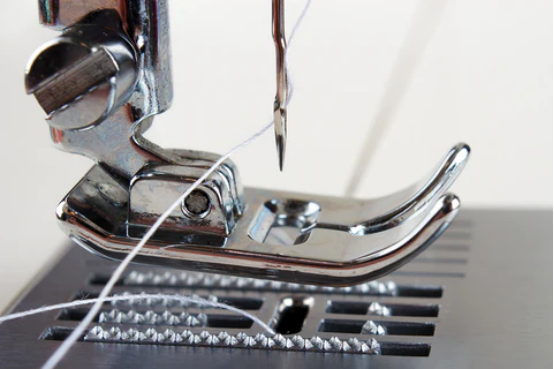
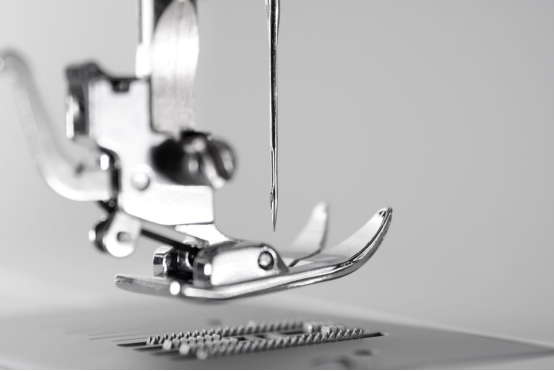
The feed dog is typically located below the needle plate. Its basic structure consists of a metal block with serrated or rectangular teeth that moves up and down and back and forth to evenly advance the fabric. During sewing, the needle penetrates the fabric to form stitches, and the feed dog automatically lifts up after the needle rises, moving the fabric forward or backward a fixed distance. This action needs to be precisely coordinated with the movements of the needle bar and presser foot to ensure consistent stitch spacing, resulting in neat and aesthetically pleasing seams.
The movement of the feed dog is typically driven by a cam, linkage, or electronic control system, achieving stable and continuous propulsion through precise mechanical design. In high-speed sewing, deviations in the feed dog’s height, tooth pitch, or movement rhythm can cause the fabric to slip, wrinkle, or misalign, severely impacting sewing quality. Therefore, the design of the feed dog must consider not only its tooth shape and size but also be optimized in conjunction with the overall motion parameters of the sewing machine.
Design considerations for efficient sewing
In modern industrial sewing machines, the design of feed dogs goes beyond simple tooth shapes, emphasizing material selection, wear resistance, and movement stability. High-quality feed dogs are typically made of hardened steel or alloy materials, capable of withstanding the wear and tear of prolonged high-speed sewing without easily deforming. Their teeth are precision-machined to ensure smooth fabric feeding across fabrics of varying thicknesses and materials, preventing thread breakage or fabric wrinkling.
Furthermore, the height and stroke of the feed dog need to be matched with the stitch length adjustment system. The larger the stitch length, the greater the feed dog’s advance distance should be to ensure even stitch distribution. When sewing heavy or multi-layered fabrics, the feed dog design must also consider lifting force and fabric gripping ability to ensure the fabric does not slip or shift during high-speed operation. For special materials, such as elastic fabrics or thin yarns, the feed dog’s tooth pitch and surface treatment are also key factors affecting sewing quality.
Technological innovation improves the performance of feed dogs
With the development of industrial sewing technology, traditional mechanical feed dogs have gradually been combined with electronic control systems, achieving higher precision and intelligent sewing. Modern high-speed sewing machines control the movement of the feed dogs through stepper motors or servo systems, automatically adjusting the feed speed and stroke according to different fabric types and stitch length requirements. This not only improves production efficiency but also reduces operational difficulty, allowing workers to maintain high-quality output during long sewing sessions.
Furthermore, some high-end industrial sewing machines employ bidirectional or variable feed technologies, enabling complex operations such as front-to-back sewing, bias sewing, and curved stitching. Bidirectional feed dogs, through specially designed tooth shapes and movement trajectories, ensure stable fabric movement in different directions, while variable feed automatically adjusts the feed step according to the sewing pattern, achieving even stitches and aesthetically pleasing seams. These innovations have significantly expanded the application range of industrial sewing machines, making them key tools for efficient production in various fields such as clothing, footwear, and home textiles.
Feed dog maintenance and usage tips
Despite their precise design, feed dogs in industrial sewing machines still require regular maintenance over long-term use. Feed dogs in industrial sewing machines are prone to jamming due to dust, thread lint, or insufficient lubrication. This not only affects feed accuracy but can also damage the fabric. Therefore, regularly cleaning debris from the feed dogs and under the needle plate, and applying a suitable amount of machine oil, can effectively extend their service life.
In addition, proper presser foot pressure and stitch spacing settings are also crucial for ensuring efficient feed dog operation. An overly tight presser foot can cause excessive fabric resistance, preventing the feed dog from advancing smoothly; an overly loose presser foot can cause fabric slippage or uneven stitches. Adjusting the presser foot and feed dog according to different fabric types is a necessary step to improve sewing quality and efficiency.
The impact of feed dog design on production efficiency of industrial sewing machines
The precise design of the feed dog directly determines the stability and speed of sewing. In mass production, even minute feed errors can lead to dimensional deviations or uneven stitches in a large number of finished products, increasing rework rates and material waste. By optimizing the feed dog shape, movement trajectory, and material selection, industrial sewing machines can maintain high-speed operation while ensuring the precision of each stitch and the aesthetics of the thread. This is crucial for industries such as garment factories, home textile production lines, and even footwear manufacturing.
Highly efficient feed dogs not only improve production efficiency but also reduce labor costs and operational complexity for businesses. In automated production environments, the application of precise feed dogs makes the sewing process more stable and reliable, maintaining uniform stitch and fabric movement even during long periods of continuous operation, providing solid technical support for large-scale production.
Summarize
The feed dog of an industrial sewing machine is a core component for achieving efficient sewing. Its design principles encompass tooth structure, motion trajectory, material selection, and coordination with the overall machine system. Through scientific design and precision manufacturing, the feed dog can achieve stable advancement across different fabrics and sewing modes, ensuring even stitches and beautiful seams. Modern industrial sewing machines, by combining electronic control technology and intelligent design, have further enhanced the performance of the feed dog, enabling it to play a crucial role in high-speed, high-precision sewing production.
For companies seeking efficient and precise sewing in industrial production, understanding the design principles and maintenance methods of feed dogs can not only optimize production processes but also improve finished product quality and overall competitiveness. With continuous technological advancements, the importance of feed dogs as a core component of industrial sewing machines will become increasingly prominent, providing a solid guarantee for efficient production in the textile and apparel industry.