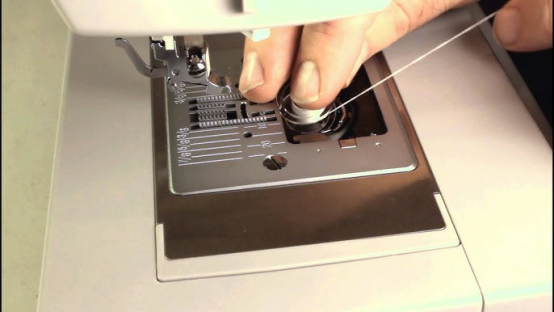
In-home sewing and handicrafts, the bobbin tension of a sewing machine is a crucial but often overlooked aspect for beginners. Many beginners encounter problems such as skipped stitches, loose threads, uneven stitches, or knotted threads during sewing, most of which are related to improper bobbin tension adjustment. Bobbin tension refers to the tension exerted on the sewing machine shuttle thread during sewing. It works in conjunction with the top thread tension to create smooth and even stitches. Understanding the principles and adjustment methods of bobbin tension can not only help beginners avoid skipped stitches and loose threads but also allow the sewing machine to perform at its best, resulting in more beautiful and durable sewn pieces.
The basic principle of sewing machine bobbin tension
The stitches on a sewing machine are formed by the interlacing of the top thread and bottom thread within the fabric. The top thread passes through the fabric via the needle bar, while the bottom thread is supplied by the shuttle system. As the needle moves down through the fabric, the bottom thread is pulled by the top thread to form a lockstitch, securing the fabric. If the bottom thread tension is too loose, it will float on the fabric surface, resulting in loose, uneven stitches. Conversely, if the bottom thread tension is too tight, the shuttle thread will be pulled too taut, causing the stitches to be taut on the fabric surface and potentially even causing the top thread to break or the needle bar to jam. Adjusting the bottom thread tension directly affects the stitch quality and the smoothness of the sewing machine’s operation, making it a core skill that sewing beginners must master.
Bottom thread tension is primarily achieved through a tensioning device within the shuttle box. This device typically consists of a spring, an adjusting screw, and a friction disc, controlling the tightness of the bobbin during sewing by adjusting the friction. After emerging from the shuttle spool, the bobbin passes through the tensioning device to apply appropriate tension before entering the shuttle winding mechanism. When the bobbin tension is balanced with the top thread tension, the stitches are neat, the lockstitch is even, and a perfect stitch is formed on both the fabric surface and back. Understanding this principle is fundamental to solving problems like skipped stitches and loose threads.
The manifestations of excessively loose or tight bottom tension
In actual sewing, the problems of excessively loose or tight bobbin tension are very obvious. When the bobbin is too loose, loose loops or floating threads will appear on the fabric surface, and the stitches will lack stability. This floating thread problem is especially noticeable when sewing thin or multi-layered fabrics, resulting in uneven stitches. When the bobbin is too tight, indentations will appear on the back of the fabric, the shuttle thread will be taut, and it may even cause the upper thread to break during sewing, affecting sewing efficiency. Beginners often mistakenly believe that skipped stitches are a problem with the needle, thread, or fabric, but in reality, adjusting the bobbin tension can often quickly solve the problem and restore smooth sewing.
Correct method for adjusting bottom tension
Properly adjusting the bobbin tension requires consideration of the sewing machine model and fabric type. First, beginners should familiarize themselves with the location of the sewing machine’s shuttle system and the tension adjustment mechanism. Most household sewing machines have a tension screw inside the shuttle box; turning the screw clockwise or counterclockwise increases or decreases the bobbin tension. Clockwise rotation generally increases tension, tightening the bobbin; counterclockwise rotation decreases tension, loosening the bobbin. When adjusting, start with small rotations, observe the stitch changes, and then fine-tune according to the fabric type to avoid excessive adjustments that could lead to unbalanced stitches.
During the adjustment process, you can first test sew on scrap fabric to observe the stitches on both sides. If loose threads appear on the fabric surface, it indicates that the bobbin thread tension is too loose and needs to be tightened appropriately. If the stitches on the back of the fabric are sunken or the upper thread is broken, it indicates that the bobbin thread tension is too tight and needs to be loosened appropriately. Through continuous test sewing and fine-tuning, the bobbin thread and upper thread tension will reach a balance, the stitches will be neater, and the problems of skipped stitches and loose threads will be solved.
Matching the bottom tension with the fabric and thread
Adjusting the bobbin tension requires matching it to the fabric type, needle size, and thread material. Thicker or multi-layered fabrics typically require slightly higher bobbin tension to ensure the shuttle thread can penetrate smoothly and form a stable lockstitch. Thinner or silk fabrics require lower bobbin tension to prevent loose threads or fabric stretching. Furthermore, different thread materials also affect the choice of bobbin tension. For example, nylon or polyester threads are smoother and require slightly higher bobbin tension to form a stable stitch, while cotton threads require lower tension. Beginners who understand the characteristics of their fabric and thread before sewing can quickly find the appropriate bobbin tension setting, reducing the likelihood of skipped stitches and loose threads.
Practical Techniques for Adjusting Bottom Tension
To avoid skipped stitches and loose threads, beginners can master a few practical techniques. First, keep the shuttle box and tensioner clean; dust or fiber debris can affect friction, leading to unstable tension. Second, regularly check the shuttle spool for looseness or jamming, ensuring the bobbin thread is pulled out smoothly. Third, adjust the bobbin tension as needed based on the sewing task and fabric changes, rather than using the same tension value consistently. Finally, adjust the bobbin tension in conjunction with the appropriate top thread tension; a balance between bobbin and top thread tension is key to achieving perfect stitches. Mastering these techniques will allow beginners to easily handle different fabrics and sewing tasks, producing neat and beautiful works.
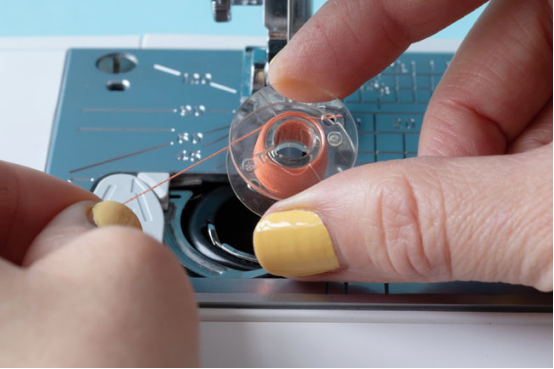
Summarize
Adjusting the bobbin tension on a sewing machine is an essential skill for sewing beginners. Bobbin tension directly affects stitch quality, determining skipped stitches, loose threads, and stitch evenness. By understanding how bobbin tension works, the symptoms of too loose or too tight tension, and the correct adjustment methods, beginners can effectively solve common sewing problems. Adjusting the tension based on the fabric, needle size, and thread characteristics, while keeping the bobbin box clean and clear, will result in smoother machine operation and more even stitches. In American home sewing, DIY crafts, and fabric art, mastering bobbin tension adjustment not only improves the quality of sewn items but also enhances the sewing experience, making sewing easier and more enjoyable.