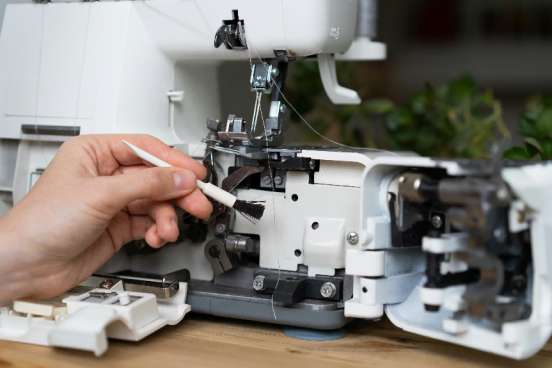
In home sewing and crafting, the presser foot is an essential and indispensable component of a sewing machine. Many beginners often treat the presser foot simply as a tool to hold the fabric in place, neglecting the unique roles of different presser feet in various sewing scenarios. In fact, the presser foot not only affects the smoothness of fabric feeding but also determines the neatness of stitches and the overall sewing effect. Understanding the types of presser feet and their working logic is key for every sewing enthusiast to unlock more sewing skills and improve sewing quality. Whether sewing everyday garments, making home textiles, or DIY craft projects, using the presser foot correctly can make the sewing process smoother and more efficient, while avoiding common problems such as fabric shifting, uneven stitches, or knotted threads.
Basic working principle of presser foot
The core function of the presser foot is to hold the fabric in place and guide it smoothly forward under the action of the needle and shuttle. A standard presser foot applies pressure via a spring, pressing it onto the fabric to ensure close contact between the fabric and the feed sprocket, thus guaranteeing even and neat stitches. The pressure needs to be adjusted according to the thickness and texture of the fabric; thinner fabrics require lighter pressure, while thicker or multi-layered fabrics require greater pressure. The coordination between the presser foot, needle, and shuttle is fundamental to the formation of stable stitches on a sewing machine. As the fabric moves under the action of the presser foot, the lower shuttle catches the upper thread, completing the lockstitch and forming a complete stitch. Understanding the basic working principle of the presser foot is a prerequisite for mastering the use of other specialized presser feet and also helps beginners achieve neater sewing results in their daily sewing.
Application of standard presser feet
The standard presser foot is the most common type of presser foot on sewing machines, suitable for straight stitches and general fabrics. It’s suitable for most home sewing projects, from garment sewing to fabric crafts, and can complete basic stitch tasks. The standard presser foot has a simple design with a flat bottom, applying even pressure to the fabric surface and smoothly feeding the fabric with the feed gear. For beginners, familiarizing themselves with the use of the standard presser foot is fundamental to understanding the working logic of other specialized presser feet.
Specialized presser feet and application scenarios
With the development of sewing technology, sewing machines are equipped with various specialized presser feet to meet different sewing needs. The zipper presser foot is one of the most common, used for sewing zippers. Its design features a groove on the bottom, allowing the needle to fit snugly against the zipper edge while avoiding contact with the zipper teeth. The zipper presser foot guides the fabric and zipper to move synchronously, resulting in even stitches and a beautiful finish. Another commonly used presser foot is the roller presser foot, suitable for thick fabrics, leather, or non-slip materials. The roller presser foot has small rollers on the bottom, reducing friction, helping to feed thick fabrics smoothly, preventing needle jamming, and improving sewing efficiency.
Elastic presser feet and knitting presser feet are specifically designed for elastic and knitted fabrics. They are typically equipped with springs or floating mechanisms to ensure even pressure on the fabric during sewing, preventing stretching or wrinkling. The working logic of an elastic presser foot is to automatically adjust the pressure according to the fabric’s thickness and elasticity, ensuring neat stitches while maintaining a degree of flexibility. Hemming presser feet are another practical and specialized type of presser foot. They use guide grooves to roll the fabric edge into the seam, resulting in neat and aesthetically pleasing edges. Their design relies on physical guidance, allowing the fabric to naturally curl, reducing the difficulty of hand hemming while creating neat stitches. They are commonly used for edge finishing of tablecloths, aprons, or clothing.
Decorative stitch presser foot
Modern household sewing machines also support various decorative stitches, with decorative presser feet specifically designed for complex stitches. By coordinating the lateral movement of the needle bar and the fabric traction system, they create diverse patterns and designs in the stitches. Although decorative stitches are complex, their working principle still relies on the presser foot applying pressure, guiding the fabric, and the bob locking mechanism; the only addition is lateral movement and program control. For users who enjoy DIY and fabric crafts, mastering the use of decorative presser feet can make their creations more personalized and creative.
The impact of presser foot selection on sewing results
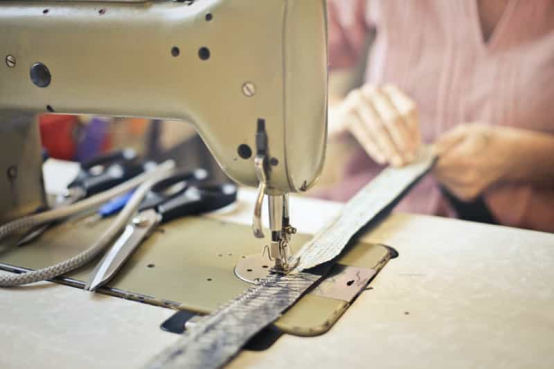
The choice of presser foot directly determines the sewing effect and the sewing experience. Different fabrics, thicknesses, and sewing tasks require different presser feet to ensure neat stitches and smooth fabric flow. For thin fabrics and everyday sewing, a standard presser foot is sufficient; for thick fabrics or leather, a roller presser foot is needed; for elastic fabrics, an elastic presser foot is required; and for decorative seams and hemming, a dedicated decorative presser foot or hemming presser foot is necessary. Understanding the working logic of presser feet and their fabric adaptability allows beginners to more accurately select the appropriate presser foot when sewing different fabrics, avoiding problems such as uneven stitches, fabric shifting, or weak stitches.
Presser foot pressure and fabric adaptability
Besides the type of presser foot, presser foot pressure adjustment is equally important. Pressure adjustment can be achieved through knobs, screws, or automatic adjustment mechanisms. Thin fabrics require lighter pressure, while thicker fabrics need more pressure. High-end home sewing machines are equipped with automatic presser foot pressure adjustment functions, which can automatically adjust the pressure according to the fabric thickness, ensuring smooth sewing. Understanding the principle of presser foot pressure adjustment helps beginners maintain even stitches and achieve the best sewing results in different sewing scenarios.
Summarize
There are many types of sewing machine presser feet, each with specific functions and working logic. Mastering the core principles of presser feet, including pressure application, fabric guidance, and coordination with the needle and shuttle, is key for every sewing enthusiast to improve their skills. By understanding the types and mechanisms of presser feet, beginners can easily handle different fabrics and sewing tasks, achieving satisfactory results from basic straight stitches and zipper installations to decorative stitches and hemming. In American home sewing, DIY crafts, or fabric projects, the proper selection and use of presser feet not only improves sewing efficiency but also makes the finished products more beautiful and practical, while simultaneously inspiring the joy of sewing creation.