Achieving a professional finish in any sewing project begins long before the first stitch is made. It starts with a deep understanding of your primary material: the fabric. The world of textiles is broadly divided into two categories—knitted and woven—and each possesses unique characteristics that dictate the tools, techniques, and skills required to handle them correctly. From the inherent stretch of a knit to the crisp structure of a woven, your approach must be tailored to the fabric’s construction. This guide provides a comprehensive exploration of sewing skills, comparing techniques for different fabric types, demystifying critical terminology like overlocking, and offering expert tips to elevate your craftsmanship.
Understanding Fabric Fundamentals: Knitted vs. Woven
The fundamental difference between knitted and woven fabrics lies in their construction. This structural variance is responsible for their distinct behaviors, such as stretch, drape, and tendency to fray. Recognizing these properties is the first step toward selecting the appropriate sewing methods.
The Structure of Woven Fabrics
Woven fabrics are created by interlacing two sets of yarns at right angles to each other. The lengthwise yarns are called the warp, and the crosswise yarns are called the weft. This grid-like structure gives woven fabrics their stability and durability. Because the yarns are tightly interlaced, wovens typically have very little to no stretch, except on the bias (the 45-degree angle to the warp and weft). The straight and cross grains are crucial for pattern layout to ensure the garment hangs correctly.
- Characteristics: Crisp, stable, and prone to fraying at raw edges.
- Common Examples: Cotton poplin, denim, linen, chiffon, satin, and canvas.
- Best For: Structured garments like tailored shirts, trousers, and jackets.
The Structure of Knitted Fabrics
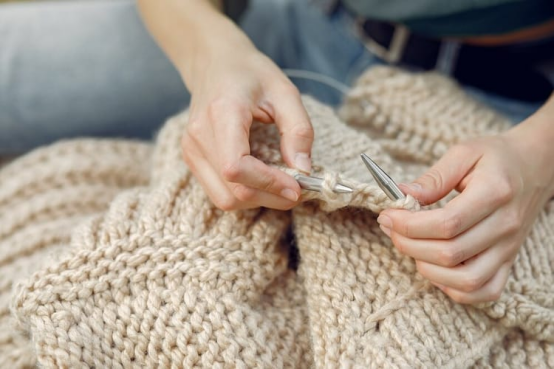
Knitted fabrics are constructed from a single yarn that is continuously looped upon itself. Think of hand-knitting, but on a much finer and more complex scale. These interlocking loops give knits their signature characteristic: stretch. The horizontal rows of loops are called courses, and the vertical columns are called wales. This structure allows the fabric to move and stretch with the body, providing comfort and flexibility.
- Characteristics: Stretchy, comfortable, less prone to fraying, and can be prone to curling at the edges.
- Common Examples: Jersey, interlock, rib knit, French terry, and fleece.
- Best For: Comfortable, close-fitting garments like t-shirts, leggings, sportswear, and sweaters.
Key Differences in Sewing Properties
The structural differences directly impact how you sew with each fabric. Woven fabrics require techniques to manage fraying, while knits demand methods that accommodate their stretch. Attempting to use woven techniques on a knit fabric will often result in popped seams and a distorted garment, while using knit techniques on a woven may be unnecessary or ineffective.

Essential Sewing Techniques for Woven Fabrics
Sewing with woven fabrics is often considered the foundation of garment construction. Success hinges on precise cutting, straight stitching, and, most importantly, managing raw edges to prevent the fabric from unraveling over time. Proper seam finishing is not just an aesthetic choice; it is essential for the longevity of the garment.
Choosing the Right Needles and Thread
For most woven fabrics, a universal needle is a suitable choice. However, for very fine wovens like silk or chiffon, a sharper, thinner needle like a Microtex is recommended to prevent snags and pulls. For heavy-duty wovens such as denim or canvas, a dedicated denim needle with a reinforced shaft is necessary to penetrate the thick fabric without breaking. All-purpose polyester thread is a versatile option that works well for the majority of woven materials.
Seam Finishes to Prevent Fraying
Because their yarns are interlaced, the edges of woven fabrics will fray if left raw. A clean, durable seam finish is critical. Several techniques can be used, depending on the fabric weight and desired finish.
- Pinking Shears: A fast and easy finish for stable, tightly woven fabrics that won’t be laundered frequently.
- Zig-Zag Stitch: A standard sewing machine can create a zig-zag stitch along the raw edge to encase the fibers.
- French Seams: An elegant, enclosed seam perfect for sheer and lightweight fabrics, where the raw edge is completely hidden within the seam itself.
- Flat-Felled Seams: A very strong and durable seam, commonly seen on jeans, where the seam allowances are folded over and topstitched down.
- Overlocking/Serging: The most professional and efficient method, which trims and encloses the seam allowance in thread.
Pressing and Hemming Techniques
Pressing is crucial when working with wovens. Pressing seams open as you sew helps to create a flat, crisp finish. For hemming, a simple double-fold hem is standard for light to medium-weight fabrics. For heavier materials, a bias-tape or faced hem may be required to reduce bulk.

Mastering the Art of Sewing with Knitted Fabrics
Sewing with knits can be intimidating due to their stretchiness, but with the right tools and techniques, it can be a rewarding experience. The primary goal when sewing knits is to preserve their natural stretch. This means using stitches and seams that can stretch with the fabric, rather than restricting it.
Selecting the Correct Needles
Using the wrong needle is the most common mistake when sewing knits. A standard sharp needle can pierce and tear the delicate loops of a knit fabric, causing runs and holes. Instead, you must use a needle with a rounded tip.
- Ballpoint Needle: This needle has a rounded tip designed to push the fabric yarns apart rather than cutting through them. It is suitable for most common knits like jersey and interlock.
- Stretch Needle: This needle has a slightly less rounded tip than a ballpoint and a special scarf design that helps prevent skipped stitches, making it ideal for highly elastic fabrics like spandex or Lycra.
Essential Stitches for Stretch
A standard straight stitch has no give and will pop when a knit fabric is stretched. You must use a stitch that can stretch. Fortunately, most modern sewing machines have built-in options.
- Narrow Zig-Zag Stitch: A very slight zig-zag (e.g., 0.5mm width, 2.5mm length) looks almost like a straight stitch but has mechanical give.
- Stretch Stitch: Often depicted as a “lightning bolt,” this stitch is specifically designed to stretch with the fabric.
- Triple Straight Stitch: This stitch sews each stitch three times (forward, back, forward), providing both strength and stretch.
- Overlock/Serger Stitch: A serger is the ideal tool for knits, as its stitch is inherently stretchy and it finishes the edge simultaneously.
Managing Fabric Roll and Stretch
Many knit fabrics, especially single jerseys, have a tendency to curl at the edges, making them difficult to cut and sew. Using a spray starch or a water-soluble stabilizer can help temporarily tame the curl. When sewing, avoid pulling or stretching the fabric. Let the machine’s feed dogs do the work. A walking foot can be very helpful as it feeds the top and bottom layers of fabric through the machine at an even rate, preventing stretching and distortion.

Decoding Essential Sewing Terminology: Locking and Overlocking
In the world of sewing, precise terminology ensures clarity and proper technique application. The terms “locking” and “overlocking” are often used in the context of finishing seams, but they refer to distinct concepts. Understanding this distinction is key to achieving a professional and durable finish on your garments.
What is Seam Locking?
“Locking” is a broad, functional term that refers to any sewing process used to secure the raw edges of a fabric to prevent them from unraveling or fraying. It is not one specific stitch but a category of techniques. Any method that “locks” the fabric threads in place falls under this umbrella. For example, using a zig-zag stitch on your sewing machine to finish a seam allowance is a form of seam locking. The goal is simply to secure the edge.
The Role of an Overlocker (Serger) Machine
An overlocker, also known as a serger in North America, is a specialized sewing machine that uses multiple threads (typically 3 or 4) to create a looped stitch. Its primary function is to join seams, trim the excess seam allowance, and enclose the raw edge all in one pass. This efficiency and the professional finish it provides make it an invaluable tool, especially for commercial garment production and for home sewers working with knit fabrics.
Overlocking Explained: Function and Application
Overlocking is the specific process performed by an overlocker machine. The stitch it creates—an overlock stitch—is fundamentally different from a standard sewing machine’s lockstitch. The overlock stitch wraps around the edge of the fabric, creating a flexible and durable seam finish. This is why it is the preferred method for sewing knits; the overlock stitch can stretch with the fabric, preventing popped seams. On woven fabrics, it provides an exceptionally clean, fast, and fray-proof edge that rivals ready-to-wear garments.
When to Use Overlocking vs. Other Seam Finishes
While an overlocker is highly efficient, it isn’t always the best choice. For delicate, sheer woven fabrics, a French seam provides a more beautiful and less bulky finish. For heavy-duty woven garments like jeans, a flat-felled seam is stronger and more appropriate. Overlocking is the superior choice for most knit fabric construction and for finishing the internal seams of woven garments where speed and fray prevention are the top priorities.

Advanced Tips for Handling Challenging Fabrics
Beyond the basic knit and woven categories, certain fabrics present unique challenges that require specialized techniques. Mastering these can significantly expand your sewing capabilities and the quality of your finished products.
Techniques for Slippery and Delicate Fabrics (Silk, Chiffon, Satin)
These fabrics are notorious for shifting during cutting and sewing. To manage them, use a rotary cutter and self-healing mat for the most accurate cuts. Layering tissue paper underneath the fabric can provide stability. When sewing, use a very fine, sharp Microtex needle and a shorter stitch length. A walking foot or a straight stitch plate can help prevent the fabric from being pushed down into the machine. Consider using French seams for a clean, enclosed finish that prevents fraying on these delicate materials.
Working with Heavy-Duty Materials (Denim, Canvas, Corduroy)
Heavy fabrics require robust tools. Use a dedicated denim needle (size 100/16 or 110/18) and heavy-duty thread. Lengthen your stitch length (e.g., 3.0-4.0mm) to help the machine form stitches through the thick layers. A “hump jumper” or a piece of folded fabric placed behind the needle can help the presser foot stay level when sewing over thick seams, like those on a jeans waistband. Pressing with steam is essential to set seams flat.
Tips for Sheer and Lace Fabrics
Handling sheers and lace is an exercise in precision. Pattern choice is key; select designs with minimal seaming. As mentioned, French seams are the ideal finish as they are narrow and hide raw edges. When cutting, place paper underneath to see the fabric edges clearly. Hand-basting seams before machine stitching can provide extra control and prevent shifting. For hemming sheers, a narrow rolled hem, either done by machine with a special foot or by hand, provides a delicate and professional finish.
Frequently Asked Questions (FAQ)
- Can I sew knit fabrics with a regular sewing machine?
- Yes, absolutely. You do not need a serger/overlocker to sew knits. The keys are to use the correct needle (a ballpoint or stretch needle) and a stitch that can stretch with the fabric. Most standard sewing machines offer a narrow zig-zag stitch or a dedicated stretch stitch that works perfectly for constructing knit garments.
- What is the main difference between locking and overlocking a seam?
- Locking is a general term for any technique that secures a fabric’s raw edge to prevent fraying (e.g., using a zig-zag stitch). Overlocking is a specific, advanced method of locking that is performed by a serger machine, which trims the seam allowance and wraps the edge in thread simultaneously for a professional, stretchy finish.
- Why is pre-washing fabric so important?
- Pre-washing, or pre-shrinking, your fabric before cutting is a critical step. Many natural fibers like cotton, linen, and rayon can shrink significantly during their first wash. If you sew a garment and then wash it, it may shrink to a size that no longer fits. Pre-washing ensures that any shrinkage happens before you cut your pattern pieces, preserving the final fit of your garment.
- What is the best seam finish for a woven fabric that frays easily?
- For a woven fabric that frays heavily, such as linen or some types of tweed, an enclosed seam is the best option for durability. A French seam is an excellent choice for lightweight fabrics as it completely encases the raw edges. For medium to heavy-weight fabrics, an overlocked (serged) edge provides the most secure and clean finish against fraying.
- How do I stop slippery fabrics from moving while cutting and sewing?
- To control slippery fabrics like silk or satin, use several specialized techniques. When cutting, use a rotary cutter and mat instead of scissors, and use plenty of pattern weights rather than pins to hold the pattern in place. Some sewists lay tissue paper or a non-slip mat under the fabric. When sewing, a walking foot helps feed the layers evenly, and using a shorter stitch length can help prevent puckering.